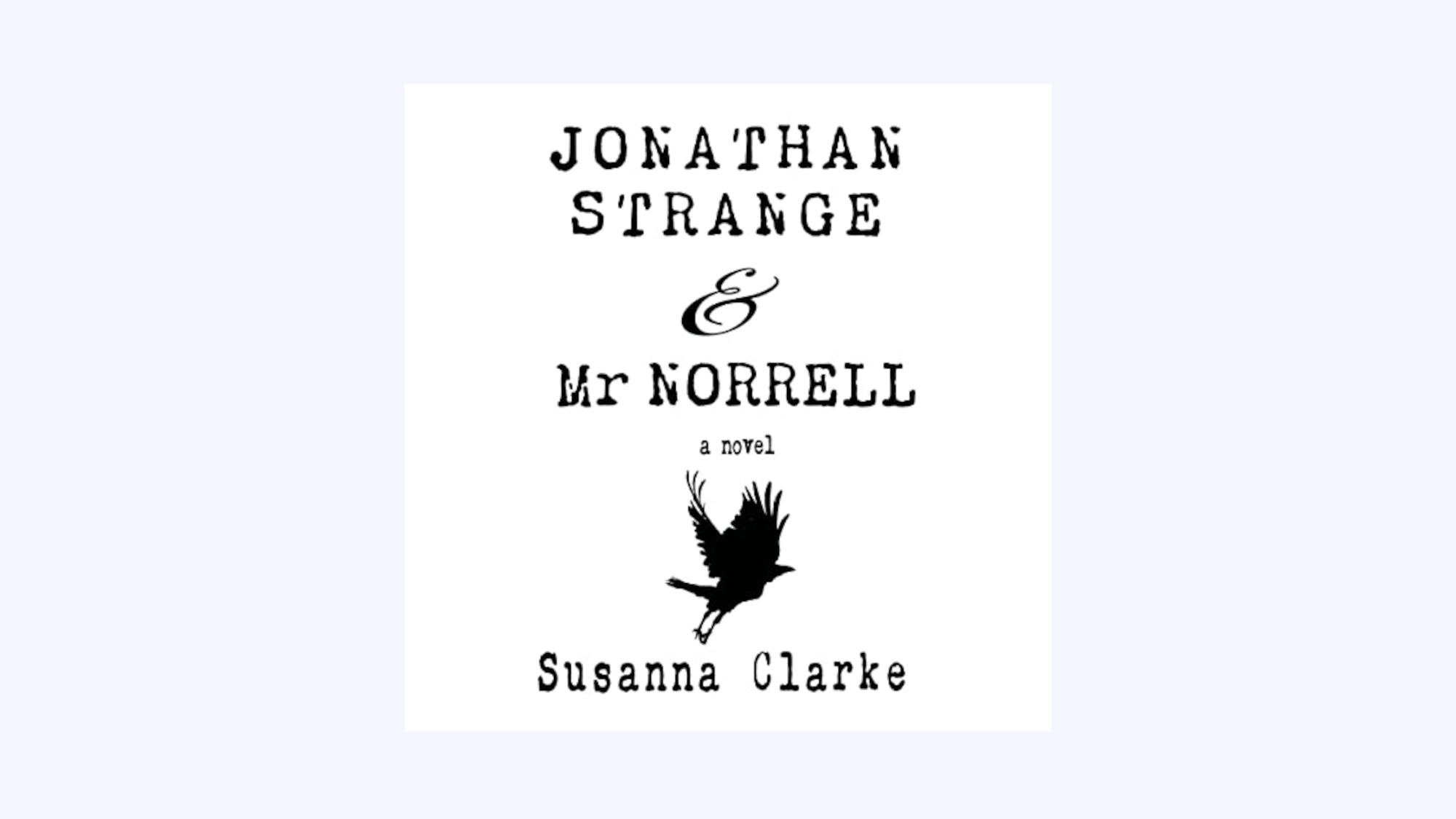
This book by Susanna Clarke – I have talked about Piranesi – is taking some shocking twists and turns that give me the impression that it is better off discussed in two lags: One for the first two thirds, and another for the final part, whatever that may bring. At least I have to get all this off my chest before reading on, just to get the respite.
What is it about?
Napoleon-era England. There are clubs and solitary philosophers who research magic, collect books about it, and dream of reviving the old magic in the modern, technology-minded world of the early 1800s. Into this situation comes Mr. Norrell, a somewhat mysterious, often hard to stomach fellow, quite full of himself and as abrasive as he is lonely: a person who desires human warmth but is entirely unable to give any, which means he drives away all but the most determined from his company. He is, it seems, the world’s only active wizard.
Mr. Norrell has kept quietly all to himself for years and years, honing his understanding of magic, and then suddenly he comes forward, with the outward goal of “reviving English magic”, but with the unusual tactic of ruining every potential competition and in the same move, potential camaraderie. Mr. Norrell hoards all the books there are about true magic, and forces every interested layman out of the hobby in obnoxious ways, so that in the end he stands alone, the one and only magician of England, sad that there is no fellow to be had.
Sounds weird?
It isn’t. I believe it is extremely insightful about the human psyche, where such a contradictory behaviour is entirely believable. As are many others, the book is just full of real-life-people, masterfully captured in the words suited for the purpose. A deeply insightful commentary on class, private relations, politics and society as a whole. It is a window into the world from a fresh perspective.
Rise of the Alternative
Anyway, after Mr. Norrell is well established as England’s magician, supports the war-effort against Buonaparte and does magical deeds off and on, including the very public resurrection of a young lady who fell ill and died. His name is made, he becomes truly famous (although stays socially inept), and with the hard-won support of the Prime Minister and the Admiralty (secured in no small part with the help of some more extrovert people who form his retinue) proceeds to root out even street-magicians with their parlor tricks, and wipes clean all common knowledge of historical magic in England (in short, as he does everything to destroy his own stated goal), there springs up a second magician, quite by accident.
Mr. Norrell attempts to destroy all others, but through his own doing and some doubtful decisions of his coat-tail-riders and servants, a younger fellow called Jonathan Strange, who recently came into his inheritance and has free time on his hands (if you know anything about Jane Austen’s work you have the perfect image of the type in mind) comes into possession of the smallest smattering of spells and tests one of them out.
It works!
And so his interest is piqued and he begins to seek and discover and learn, and he is so talented and smart that even in the face of the obstacle that Mr. Norrell is keeping every conceivable source of deep knowledge far away under lock and key, he manages to become an active magician in his own right.
Now, Jonathan Strange is quite a different person than Mr. Norrell. Instead of doubts, mutterings, and nay-saying, he offers a can-do attitude and a fresh mind. Even more so, he marries a wonderful, capable, intelligent and all-out astonishing woman called Arabella. Marriage for a magician? A concept that seems unthinkable to a Mr. Norrell. A confrontation between England’s only two magicians seems inevitable, but to everyone’s surprise Strange becomes Norrell’s pupil! For a time Norrell indulges him, gives him access to a carefully vetted and censored list of books, until Strange takes part in the war, as the magical aide to Lord Wellington, and in the practical application of magic under pressure and in bad weather with access to only few and damaged books, he grows fast, learns faster, and surpasses his “master” and they finally do have their conflict and part ways.
Interestingly that is at a time when there is also some element that made me strongly recall Piranesi.
All this time they are both watched by a third person, not a magician as such, but more: a Faerie who is even more self-centered and callous as even Mr. Norrell; one may go as far as calling him vile, but that does not quite fit as he just lives his nature as a non-human. This “gentleman” is, one must say, a right villain of uncanny proportions who thinks nothing of destroying the lives of mere humans – as befits an Elf, given that we mortals are hardly more than chickens in a coop by his measure.
And then, one day at about two thirds of the book, deliberate pace and world building step back as all fine hell breaks loose and things go shockingly haywire. I even cried out loud at one point, something like “Oh no way!”. Then the situation spinned even farther out of control to an extent where I felt I have to interrupt my reading and just write about things as they went so far.
Well played, Ms Clarke. You deliver some solid gut-punches.
Characters
The most gripping strength of “Jonathan Strange & Mr. Norrell” is the skillful and elegant character work. Susanna Clarke is a master at weaving personages so lifelike that if anyone told me these were actual people of the era I would believe it in an instant.
My favourite by far is Jonathan’s wife Arabella, who is such a perfect support for Jonathan Strange, which he hardly recognizes enough. In fact, much of it he does not even know. I was particularly gripped by her attempts to secure magical books for him while he was overseas, where she was thwarted by Mr. Norrell and was brought to tears, so much wanted she to aid her dear husband in his endeavours. She is also the only person who is tenacious enough to keep nourishing an almost-one-sided friendship with another Lady, which goes to show her outstanding strength of character.
Yes, I am an Arabella-fan.
But as I said, the characters in “Jonathan Strange & Mr. Norrell” are all very real, even to absolute side-characters who merely pass by: as soon as they are shown to do anything, it is masterfully done in a way that makes it feel real. Susanna Clarke has an absolute eye for people and the empathy to lend them each a life of their own, vibrant where it is shown directly, and still very present where it is merely hinted at.
Society
This perceived reality of her creation allows us, the reader, a witty look into the England of that day and age, including many a fine jest, or loving/critical stab, be it about certain cities or about Wales or, in one particularly hilarious example, about Scotland.
Leaving the magic aside (which is easily done because almost no-one in the book knows how to do any), we are looking at an extraordinary depiction of English society in the early 1800s, especially, one must say, the male half of the species. Susanna Clarke is a woman, but she has the power of perception and her descriptions of men in their doings and conversations are such that they are very relatable.
There is also war, and the aristocracy, and the dealings between masters and servants, and masters and the servants of others, the high society and its tides, the political movers and shakers and their hangers-on: Susanna Clarke manages to paint it all so vividly, through the stress that she puts on the world rather than the action. This tactic, the descriptive instead of the direct, makes the plot unfold more slowly than is customary these days, but it invites us to be part of it and feel the time when all these things happen.
Language
Another tool of immersion in Susanna Clarke’s wordsmith’s shed is her deliberate introduction of “mistakes”, that is, slightly older turns of phrases, that serve to draw the reader into the buy-in. As one example, she continuously uses the word “surprized”, which in its oddity to modern ears forms a bridge into the subjective feel of the early 19th century.
In Conclusion
It is not a quick read on the side: the book is long and intricate and it requires buy-in. It demands, firstly, a love for reading, because someone who finds reading a chore will never grow into “Jonathan Strange & Mr. Norrell”, but more than that, it also asks for a certain mindset. Maybe it is the perceiving humor as described in the Myers-Briggs Type Indicator? Or maybe I am wrong about that, but anyway, I am convinced that this book will either grip and fascinate you or bore you to death, not due to anything else but reading-style. I certainly hope it will grip and fascinate as many readers as possible.
I am lucky enough to have fallen in love with it so I regard it as a stunning masterpiece that cannot be praised highly enough. Yet its style is such that there will be many people who will be put off by it. It just comes with the way of this book. A question of personality and style, to no-one’s fault.
Now, as I have recovered somewhat from the shocking developments, onward, off to continue the book and as the pieces are set let the hands of fate dole out what they must.

 PAPIER UND SPIELE